“The heart of China — A national symbol bearing witness to seven hundred years of vicissitudes”
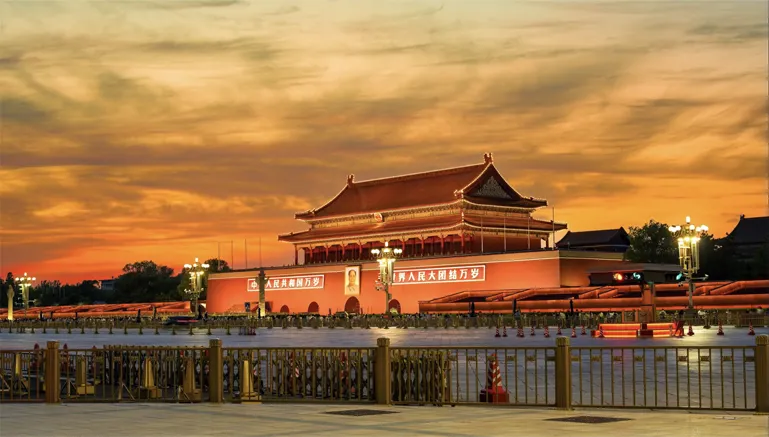
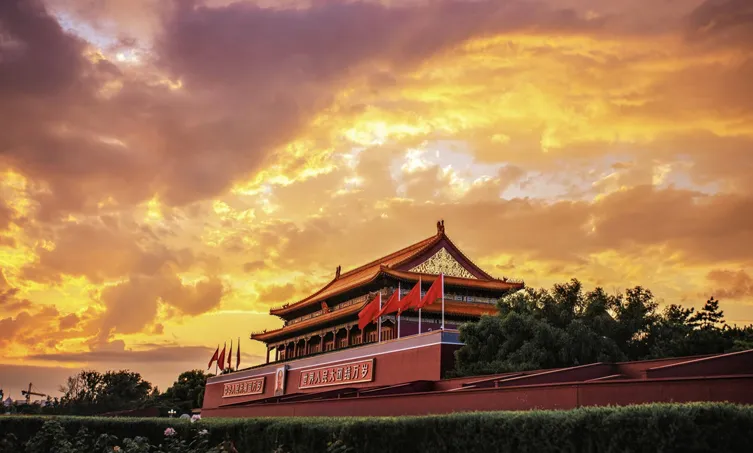
Tiananmen sits at the core of Beijing’s central axis. It was the main southern gate of the imperial city during the Ming and Qing dynasties and remains an icon of modern-day China. First built in 1417, the 15th year of the Yongle reign of the Ming Dynasty, it was originally named the Chengtianmen, meaning “Receiving the Mandate of Heaven”. Rebuilt and renamed Tiananmen in 1651, the 8th year of the Shunzhi reign of the Qing Dynasty, its new name implies “Receiving the mandate of heaven, bringing peace and good governance to the nation”. Its core selling point: far more than a grand gate-tower, it is a spiritual totem for the Chinese nation. From the “Golden-Phoenix Edict Ceremony” of the Ming-Qing period to the proclamation “The Central People’s Government of the People’s Republic of China is founded today!” at the 1949 Founding Ceremony, Tiananmen has witnessed both the rise-and-fall and the rebirth of this land.
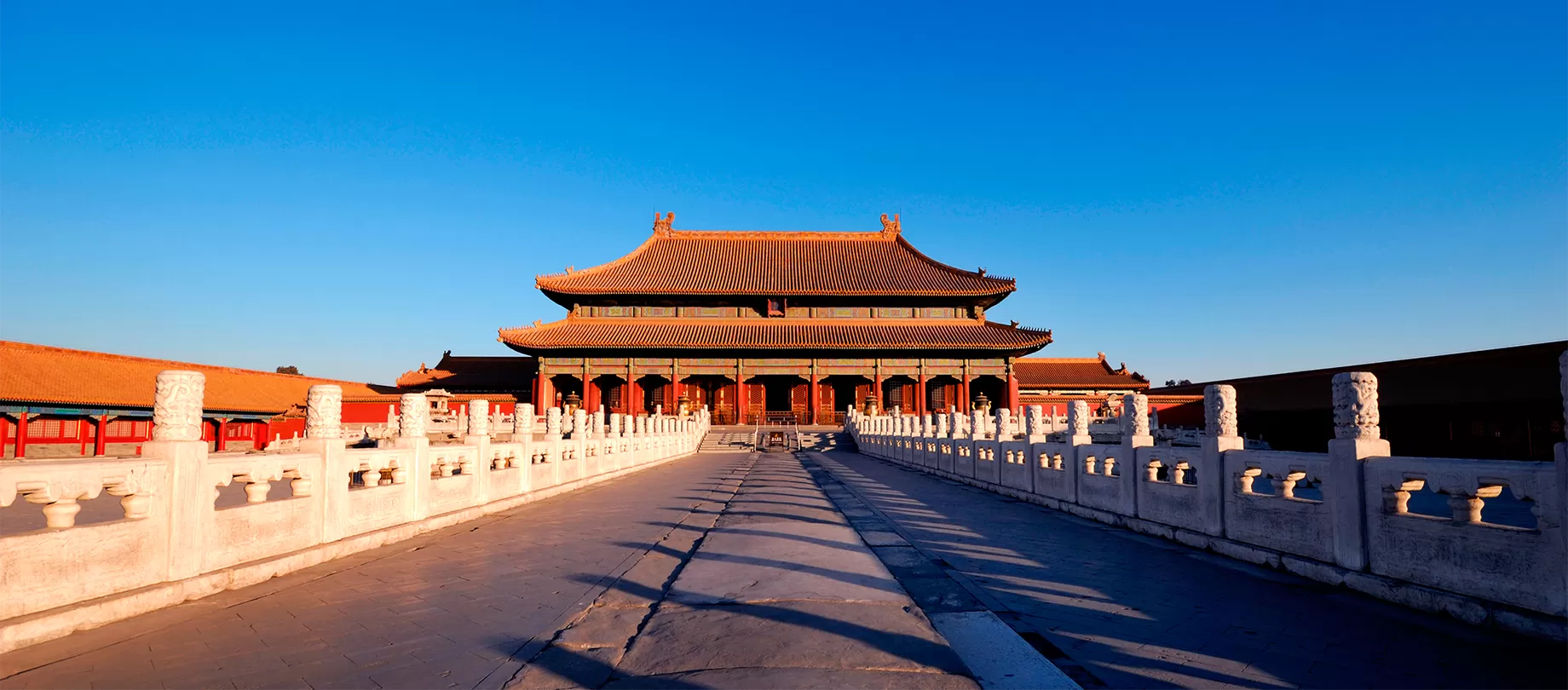
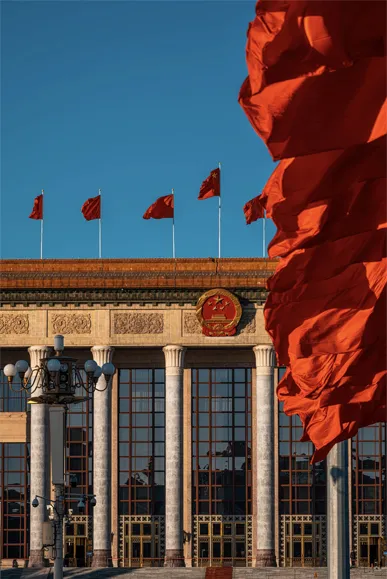
For overseas visitors, Tiananmen Square ranks as the world’s largest urban public square, capable of holding a million people for mass assemblies. Surrounding it stand landmark buildings of contemporary China: the Great Hall of the People, the National Museum of China, and the Monument to the People’s Heroes. Standing in the centre of the square, visitors feel the overwhelming power of grand historical narratives and the pulse of the times. It serves both as a vital window for understanding Chinese history and a core landmark for experiencing the spirit of modern China.
Architectural Layout: Main Gate of the Imperial City
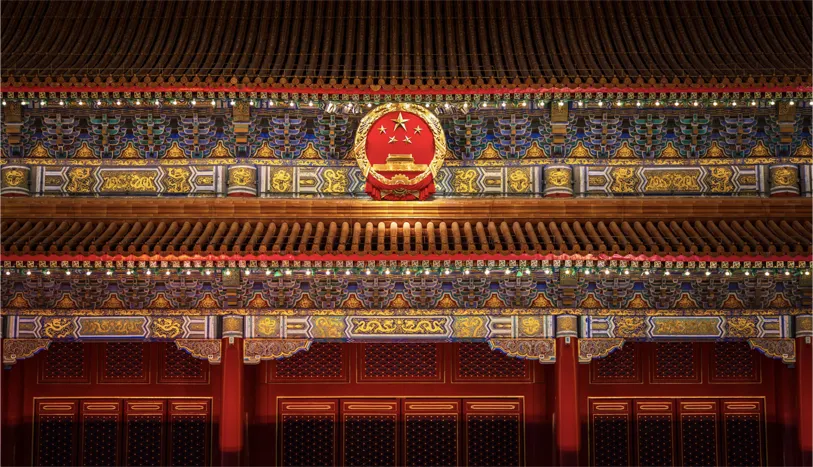
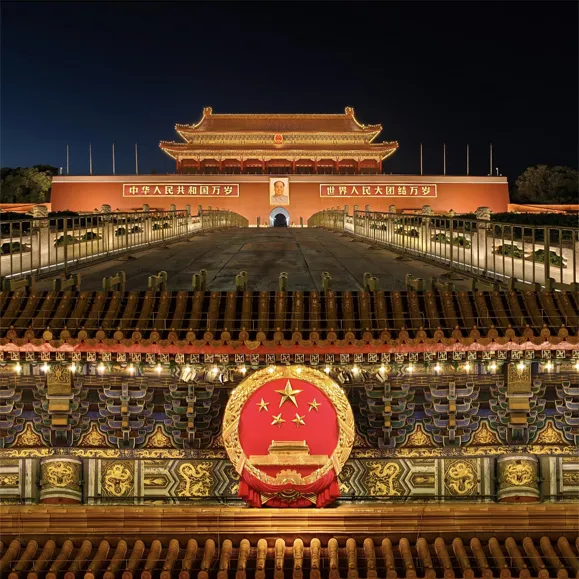
The Tiananmen Rostrum stands 33.7 metres high, composed of a massive platform and the upper gate-tower. The platform rests on a white marble Sumeru-style base 12.3 metres tall. The rostrum features a double-eave hip-and-gable roof covered with golden glazed tiles, with the national emblem of the People’s Republic of China hung beneath the eaves. Five arched gateways pierce the platform: the central arch was reserved exclusively for emperors, while nobles and high-ranking officials used the side passages. Seven marble Golden-Water Bridges span the Golden-Water River in front of the gate. The central Imperial Bridge was for emperors only, flanked by Prince-rank bridges, Official-rank bridges and Civil-Commoner bridges, reflecting a strict social hierarchy. Ornamental huabai stone pillars rise before the bridges. The mythical beast Wangtianhou crouching atop each pillar embodied ancient expectations for emperors: “pray for the sovereign’s return” and “pray for the sovereign’s departure on inspection tours”, reflecting earnest hopes that rulers would be diligent and care for their people.
Three key memorial landmarks on the square:
1. Monument to the People’s Heroes: Located at the square’s centre, erected in memory of heroes who sacrificed their lives in successive revolutionary struggles. Its front face bears eight large characters inscribed by Mao Zedong: “Eternal glory to the people’s heroes”. The inscription on its reverse side was drafted by Mao Zedong and hand-written by Zhou Enlai.
2. Mausoleum of Mao Zedong: South of the monument, this solemn hall houses Mao Zedong’s remains. It is a revered site where visitors from home and abroad pay tribute to the great leader.
3. Zhengyangmen Gate and Qianmen Street: At the southern end of the square. Zhengyangmen formed the main southern gate of Beijing’s inner city and marks the southern terminus of old Beijing’s central axis, standing in north-south dialogue with Tiananmen Rostrum.
Historic Moments: The Golden-Phoenix Edict and the Founding Ceremony
Tiananmen has borne witness to countless epoch-making events. During the Ming and Qing dynasties, on great occasions such as an emperor’s enthronement or an empress’s coronation, the “Golden-Phoenix Edict Ceremony” was held atop Tiananmen. Imperial decrees were lowered down via a carved-wood golden-phoenix figurine, received by Ministry of Rites officials and promulgated across the realm, symbolizing supreme imperial authority. On October 1 1949, Mao Zedong proclaimed the founding of the People’s Republic of China to the world from the Tiananmen Rostrum. His solemn declaration travelled across the globe via radio waves, establishing Tiananmen as the symbol of New China. Today, the daily flag-raising ceremony draws travellers from every corner of the globe. The honour guard marches in precise formation across the Golden-Water Bridges. To the sound of the national anthem, the Five-Star Red Flag rises together with the morning sun, ushering in a brand-new day for this ancient metropolis.
We use cookies to offer you a better browsing experience, analyze site traffic and personalize content. Part of the tracking is necessary to ensure SEO effectiveness, By using this site, you agree to our use of cookies. Visit our cookie policy to learn more.
 English
![[Kangyi Documentary] Summer Coolness Delivery, Warming Hearts on the Journey | Hangzhou Kangyi International Travel Service Pays Tribute to Every Guide Holding the Front Line](/uploads/images/we-are-committed-to-pursuing-excellence-and-striving_1772702268.webp "[Kangyi Documentary] Summer Coolness Delivery, Warming Hearts on the Journey | Hangzhou Kangyi International Travel Service Pays Tribute to Every Guide Holding the Front Line")
![[Kangyi Documentary] Under the Scorching Sun, True to Our Original Aspiration! Tribute to the Most Beautiful Tour Guides Holding Their Posts in the High Heat](/uploads/images/1_1772702274.webp "[Kangyi Documentary] Under the Scorching Sun, True to Our Original Aspiration! Tribute to the Most Beautiful Tour Guides Holding Their Posts in the High Heat")
![[Kangyi Documentary] Spectacular Scene! A 1,400-Person Group Tour of Jiangnan, Successfully Hosted by Kangyi International Travel Service!](/uploads/images/2_1772702280.webp "[Kangyi Documentary] Spectacular Scene! A 1,400-Person Group Tour of Jiangnan, Successfully Hosted by Kangyi International Travel Service!")