“The backbone of human civilization — An oriental dragon winding amid towering mountains”
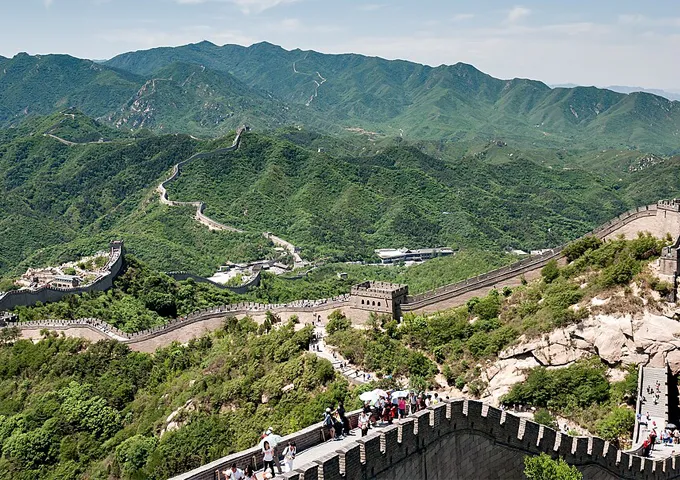
The Great Wall at Badaling sits at the northern entrance of the ancient Guangu Pass Road in Jundu Mountain, Yanqing District, Beijing, covering a touring area of 1.19 million square meters. It is the best-preserved and most representative section of the Ming Great Wall, as well as the earliest-opened segment of the Ten-Thousand-Li Great Wall for visitors. Its core selling point lies in the fact that it is far more than a military defensive work; it stands as a physical symbol of the Chinese nation’s perseverance and indomitable spirit. Like a giant dragon, the wall coils along steep mountain ridges, merging precipitous natural mountains with grand man-made architecture. Every brick underfoot bears centuries-old memories of wars and beacon fires, while rolling distant mountains unfold in a vast, magnificent panorama.
For overseas visitors, the Great Wall strikes awe with its epic scale and boundless vistas. Climbing up the Hero Slope and gazing far into the distance, you will see the Great Wall stretching like a chain, mighty passes standing firm as locks, and layers upon layers of distant mountains forming a sublime, expansive view. Such open vistas and soul-stirring shock are scarcely matched anywhere across the globe. In 1991, Badaling Great Wall represented China’s Great Wall to receive the World Cultural Heritage Certificate issued by UNESCO. In 2007, Badaling Great Wall was rated a National 5A-level Tourist Attraction. Meanwhile, the China Great Wall Museum at the foot of the Great Wall comprehensively displays the construction history and military wisdom of this world wonder through cultural relics and scale models, enabling every visitor to understand the past and present of this “Oriental Dragon”.
Architectural Layout & Defensive Wisdom
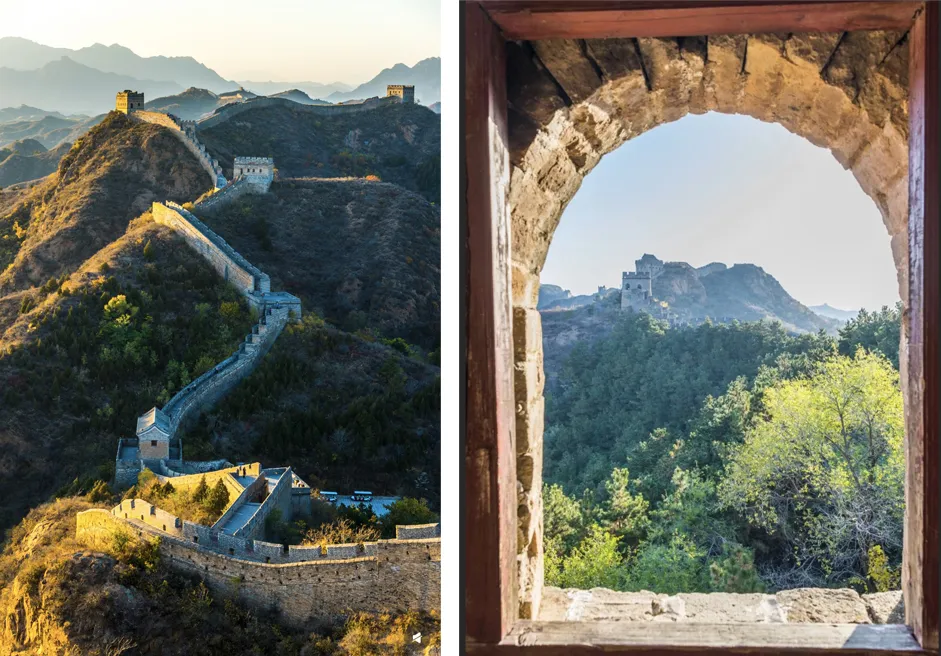
An old saying goes: “The peril of Juyong Pass lies not in the pass itself, but in Badaling.” The Badaling section of the Ming Great Wall is known as the “Jade-Barrier Heavenly Moat”, one of the Eight Sights of Juyong Pass in the Ming Dynasty. The city wall is built of huge granite ashlar blocks and blue bricks. Its top is wide enough for five horses to ride abreast and ten people to walk side-by-side. Towering watchtowers and beacon towers stand at regular intervals along the wall. Watchtowers served for stationing troops and stockpiling grain, while beacon towers transmitted military intelligence: smoke by day was called sui, and flame torches by night were called feng. This ancient communication system guaranteed efficient delivery of border-defense messages. Watchtowers and beacon towers still stand tall today; each one tells tales of border garrisons’ loyalty and perseverance and bears witness to vicissitudes of history.
Three key highlights among core buildings and facilities:
1. Hero Slope: Located between the 4th Southern Tower and the 4th Northern Tower, it is one of the steepest segments of the Great Wall. Reaching this spot lets visitors embrace the heroic spirit of “He who has never been to the Great Wall is not a true man”, a must-climb spot for every tourist.
2. China Great Wall Museum: Situated at the scenic-area entrance, its title was personally inscribed by President Jiang Zemin. Boasting abundant collections, it showcases over 2,000 years of the Great Wall’s construction history and military wisdom via physical artifacts, models, and multi-media audio-visual technologies.
3. Watchtowers & Beacon Towers: Distributed along the Great Wall, they were vital installations for ancient garrison defense and military-intelligence transmission. Still standing firm, each embodies border soldiers’ loyalty and dedication.
Ice, Snow, Dawn & Dusk — Four-Season Scenery of the Great Wall
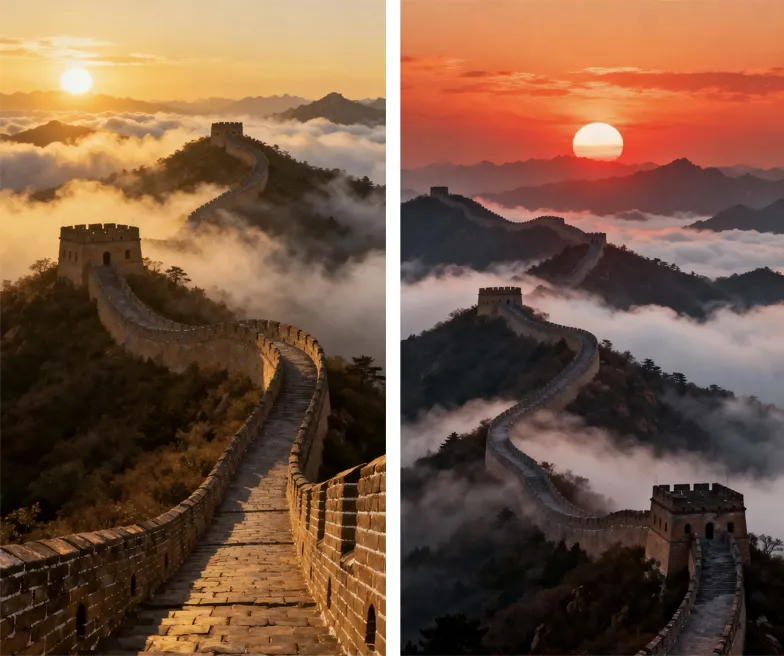
Badaling Great Wall boasts distinct four seasons, each with unique charm. In spring, mountain blossoms bloom in profusion, and the Great Wall winds through flower seas, blending fortitude with soft grace. In autumn, forests blaze with rich fall hues; red mountain leaves create sharp visual contrast against grey bricks, making it prime season for photographers. After snow falls in winter, the Great Wall is clad in silvery white, resembling a jade dragon reclining atop mountain crests, embodying the northern-China poetic vision: “Mountains dance like silver serpents, highlands gallop like wax elephants”. At dawn, the rising sun gilds the wall, outlining its contours sharply. At dusk, sunset glow dyes the whole rampart warm red, as if coating the giant dragon in firelight. Thanks to this rich interplay of seasonal shifts and changing light from dawn till dusk, the Great Wall delivers “never repeating scenery”. Every ascent brings brand-new visual thrills.
We use cookies to offer you a better browsing experience, analyze site traffic and personalize content. Part of the tracking is necessary to ensure SEO effectiveness, By using this site, you agree to our use of cookies. Visit our cookie policy to learn more.
 English

![[Kangyi Documentary] Summer Coolness Delivery, Warming Hearts on the Journey | Hangzhou Kangyi International Travel Service Pays Tribute to Every Guide Holding the Front Line](/uploads/images/we-are-committed-to-pursuing-excellence-and-striving_1772702268.webp "[Kangyi Documentary] Summer Coolness Delivery, Warming Hearts on the Journey | Hangzhou Kangyi International Travel Service Pays Tribute to Every Guide Holding the Front Line")
![[Kangyi Documentary] Under the Scorching Sun, True to Our Original Aspiration! Tribute to the Most Beautiful Tour Guides Holding Their Posts in the High Heat](/uploads/images/1_1772702274.webp "[Kangyi Documentary] Under the Scorching Sun, True to Our Original Aspiration! Tribute to the Most Beautiful Tour Guides Holding Their Posts in the High Heat")
![[Kangyi Documentary] Spectacular Scene! A 1,400-Person Group Tour of Jiangnan, Successfully Hosted by Kangyi International Travel Service!](/uploads/images/2_1772702280.webp "[Kangyi Documentary] Spectacular Scene! A 1,400-Person Group Tour of Jiangnan, Successfully Hosted by Kangyi International Travel Service!")