"A 400-year-old Jiangnan dream hidden in the bustling heart of Shanghai – a Ming Dynasty private garden hailed as 'the most exquisite in the southeast'"
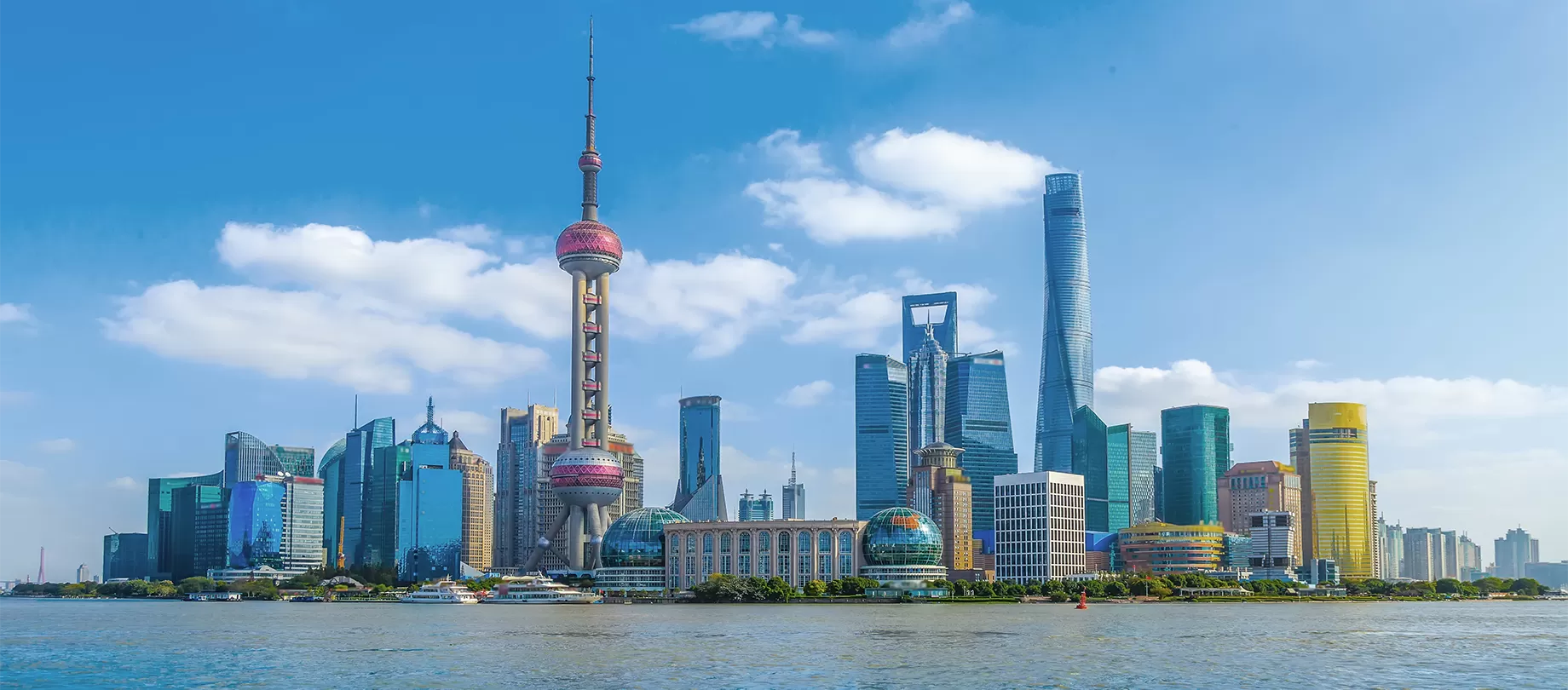
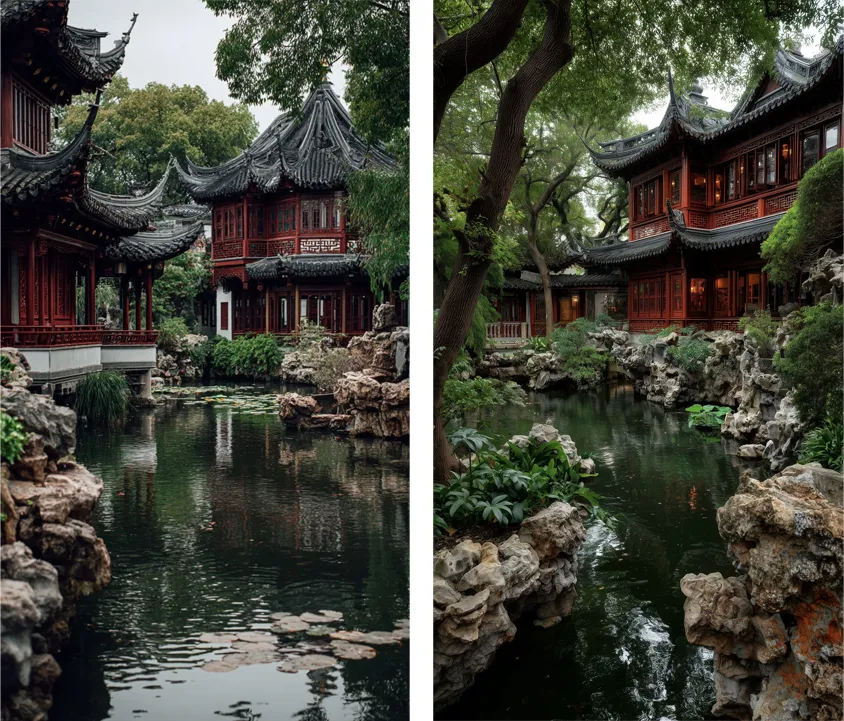
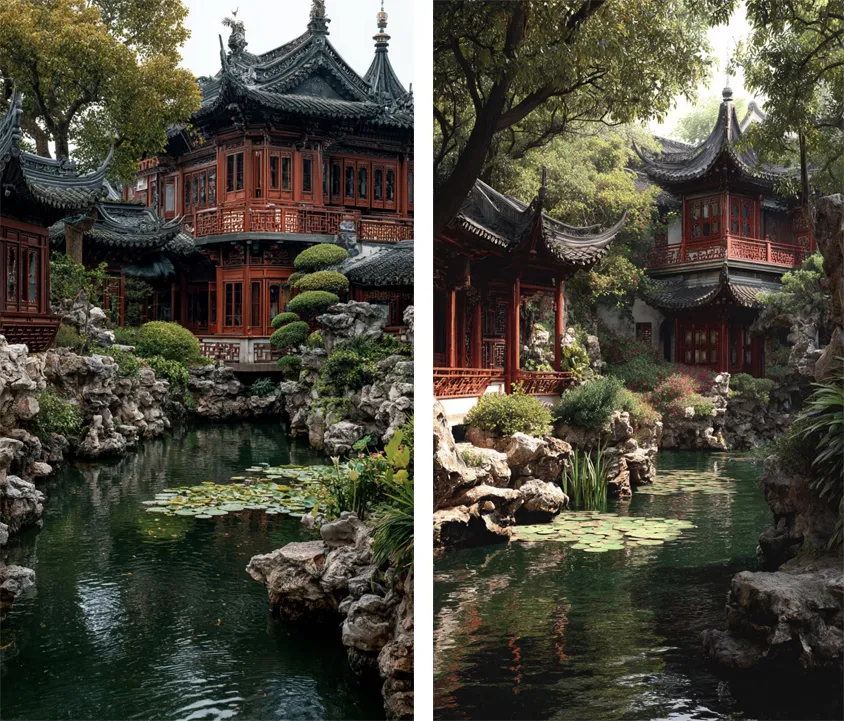
Yu Garden is located in the northeastern part of Shanghai's old city, bordered by Fuyou Road to the north and Anren Street to the east, adjacent to the City God Temple and the Yuyuan Bazaar. It is a National Key Cultural Relic Protection Unit. Its core appeal lies in this: surrounded by skyscrapers in the center of Shanghai, this 400-year-old Ming Dynasty private garden still maintains the "serene, elegant, and exquisitely delicate" character of Jiangnan gardens. Every rockery, curious stone, pavilion, and tower within the garden is a masterpiece of classical Chinese garden art.
For international visitors, what makes Yu Garden unique is the striking contrast of "tranquility amidst the bustle" – passing through the vibrant market life of the City God Temple and pushing open a garden gate leads you into an entirely different world. The renowned garden scholar Chen Congzhou once commented on Yu Garden: "Though made by human hands, it appears as if heaven-made."
II. Historical Origins – A Garden Built for Filial Devotion
Yu Garden was first constructed in the 38th year of the Ming Jiajing era (1559) by Pan Yunduan, a former Provincial Administration Commissioner of Sichuan, who built it to provide a peaceful retreat for his father Pan En in his old age. It took over twenty years of dedicated effort to complete. The character "Yu" (豫) is taken from the I Ching (Book of Changes), meaning "peace" and "security," carrying the implied wish of "bringing joy to one's elders."
The garden was meticulously designed by the renowned Ming Dynasty garden designer Zhang Nanyang, who also personally supervised its construction. At completion, it covered over seventy mu (approximately 11.5 acres), with grand scale and stunning scenery. Contemporaries praised it as "the most exquisite in the southeast" and "the crown of southeastern gardens." Pan Yunduan recorded his aspirations in Yu Garden Records: "In my old age, I have dug ponds and built pavilions to create a garden for my own enjoyment and to bring joy to my parents."
Over its 400-year history, Yu Garden has weathered many vicissitudes – after the Pan family's decline, the garden fell into disrepair. During the Qing Qianlong era, it was purchased and restored by local gentry and merchants. Later, it suffered repeated damage due to the Opium War, the Small Sword Society Uprising, and the entry of Taiping forces into the city. After the founding of the People's Republic of China, Yu Garden underwent extensive restoration and officially opened to the public in 1961. Today it covers over thirty mu (approximately 5 acres) and preserves the architectural and artistic style of Ming and Qing dynasty Jiangnan gardens.
III. Six Scenic Areas – The Exquisite World of Pavilions and Towers
Yu Garden features six scenic areas – Sansui Hall, Wanhua Tower, Dianchun Hall, Huijing Hall, Yuhua Hall, and the Inner Garden – each showcasing the unique character of "though made by human hands, it appears as if heaven-made."
Sansui Hall – The Garden's First View
Sansui Hall is the first main building encountered upon entering the garden. Built in the 25th year of the Qing Qianlong era (1760), the hall stands 9 meters tall, spans five bays, and is grand and spacious. The name "Sansui" originates from the phrase "three ears of grain on the beam," symbolizing official advancement and abundant harvests. During the Qing dynasty, this hall served as a venue for official celebrations and the "proclamation of imperial edicts," as well as a place for scholars to discuss Confucian classics. Three gilded plaques hang inside – "Sansui Hall," "The Origin of the Spirit Terrace," and "Urban Mountains and Forests." The phrase "Urban Mountains and Forests" perfectly captures the soul of Yu Garden: living in the midst of a bustling city while enjoying the rustic pleasures of mountains and forests. The lower panels of the hall's main doors are carved with auspicious motifs of rice, wheat, corn, sorghum, and melons, while eight exquisite clay-sculpted openwork windows adorn the surrounding corridors.
Wanhua Tower – An Elegant Setting of Ancient Trees and Winding Corridors
Wanhua Tower was originally the site of the Ming Dynasty Flower Goddess Pavilion. The existing main structure was rebuilt during the Qing Daoguang era and later renamed "Wanhua Tower." The two-story building features exquisite carvings and is surrounded by winding corridors and balustrades, turning every three or five steps. The balustrades are carved with the "Hidden Eight Immortals" pattern – the eight magical implements carried by the Eight Immortals of Daoist legend. Two ancient trees stand before the tower: a 14-meter-tall ginkgo on the right, said to have been planted by Pan Yunduan's father Pan En, over 400 years old; and a century-old magnolia on the left. At the four corners of the tower's base, clay-sculpted openwork windows depicting plum, orchid, bamboo, and chrysanthemum integrate traditional Chinese scholarly virtues into the garden's details.
Dianchun Hall – The Site of the Small Sword Society Uprising
Dianchun Hall was built in the early Qing Daoguang era by the Sugar and Confectionery Trade Guild. Its name derives from a line in a Su Shi poem: "Emerald dots adorn the spring's beauty." This served as the northern headquarters of the Small Sword Society during their uprising in 1853 and is the only surviving site of the Shanghai Small Sword Society Uprising. The hall features richly carved beams and painted rafters, with opera figures carved on the door and window lattices, vivid and lifelike. Before the hall stands a small three-sided waterside stage named "Phoenix Dancing and Luan Singing," one of the best-preserved Qing dynasty stages in Shanghai's urban area. During his visit in 1961, the renowned writer Guo Moruo composed a poem: "At the Small Sword Society site, memories unfold – a sea of red handkerchiefs rose from this coastal corner." Behind Dianchun Hall is a waterside balustrade where visitors can lean over to watch fish, with a plaque reading "Flying and Leaping" – meaning "birds fly and fish leap."
Yuhua Hall and the Jade Exquisite – One of Jiangnan's Three Famous Stones
Yuhua Hall was originally Pan Yunduan's study. Before it stands the garden's most treasured possession – the Jade Exquisite (Yulinglong). This stone, together with the Guan Yun Peak in Suzhou and the Zhou Yun Peak in Hangzhou, is known as one of the "Three Famous Stones of Jiangnan." Standing approximately 3 meters tall, the stone is covered with numerous holes and cavities, embodying the classic Taihu stone aesthetic of "wrinkled, hollow, lean, and transparent." Legend has it that this stone was part of Emperor Huizong of the Song dynasty's "Flower and Stone Network" that was scattered during transport. Pouring water from the top causes it to flow through a hundred openings; burning incense at the base causes smoke to emerge from a hundred holes. The Ming dynasty literary figure Wang Shizhen praised it in verse: "Outshining a thousand peaks as it soars into the blue sky – what name could match the Jade Exquisite?"
The Inner Garden – A Garden Within a Garden
The Inner Garden was originally established in the 48th year of the Qing Kangxi era (1709) as a garden attached to the Shanghai City God Temple. It was incorporated into Yu Garden during the 1956 restoration, becoming a "garden within a garden." Though covering only slightly over two mu (approximately 0.3 acres), the Inner Garden exemplifies the principle of "small garden, grand vision" – featuring the Jingguan Grand Hall, Guantao Tower, Huanyun Tower, Songcui Pavilion, and Nanyi Boat. Before the Jingguan Grand Hall stand an array of strangely shaped stones, some resembling the "Three Officials Offering Longevity" and others "Nine Lions Playing with a Ball" – requiring quiet contemplation to fully appreciate their beauty.
IV. Rockery and Stone Scenery – The Enduring Legacy of a Master Rockery Builder
The Great Rockery – Jiangnan's Oldest Yellow-Stone Rockery
The Great Rockery was masterfully designed by the Ming dynasty rockery master Zhang Nanyang. It is the oldest, most exquisite, and largest yellow-stone rockery in Jiangnan and the only surviving work by Zhang Nanyang. Constructed using yellow stones from Wukang, Zhejiang, it glows with a golden radiance in sunlight. Its ingenious layout seamlessly blends nature's magnificence with human craftsmanship. From the "Wangjiang Pavilion" at its summit, visitors once could gaze upon the sailboats on the Huangpu River.
Dragon Walls and the Yuan Dynasty Iron Lions
Several dragon walls wind through Yu Garden, including the Cloud-Piercing Dragon, Reclining Dragon, and Two Dragons Playing with a Pearl – serving both as spatial dividers and unique landscape elements. To the east of Sansui Hall stand a pair of Yuan Dynasty iron lions, one male and one female, originally cultural relics from Nanyang, Henan. They were intercepted in Shanghai during the War of Resistance against Japan after being looted by the Japanese army. Additionally, the Huanyun Rockery was crafted by the contemporary garden master Chen Congzhou, who also inscribed the characters "Yin Yu" (Bringing in Jade) and "Liu Cui" (Flowing Emerald) on the front and back of the moon gate.
V. Lake Heart Pavilion and the Nine-Turn Bridge – The Soul of the Yuyuan Bazaar
The Lake Heart Pavilion, located amidst the Nine-Turn Bridge, was originally one of Yu Garden's early scenic features, known as the "Island Pavilion" or "Waterfowl Pavilion." The current pavilion has a T-shaped floor plan, with a roof composed of six spires and short-ridged gable roofs of varying sizes, featuring 28 corners arranged in a pleasingly irregular pattern. The Nine-Turn Bridge on either side was originally built with stone slabs and wooden railings, replaced with cement railings in 1924. Today, the Lake Heart Pavilion has become one of Shanghai's most celebrated teahouses and the core landmark of the Yuyuan Bazaar.
VI. Yu Garden Lantern Festival – A Folk Celebration Over 400 Years Strong
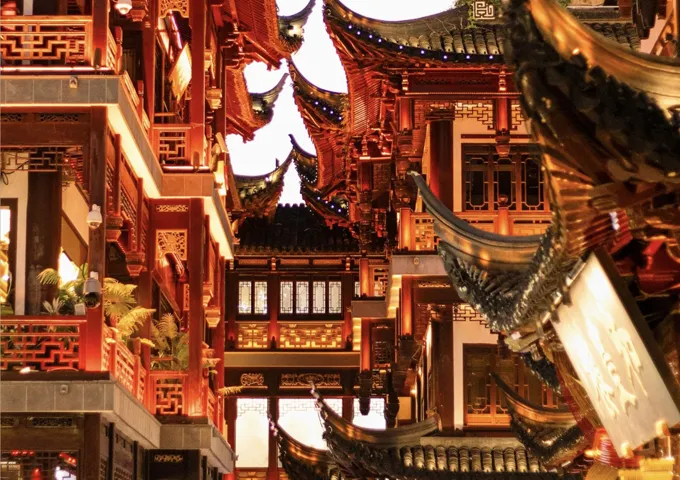
The Yu Garden Lantern Festival is Shanghai's most renowned traditional folk event, with a history spanning over 400 years. During the Ming and Qing dynasties, on the night of the Lantern Festival, the area around the City God Temple and Yu Garden would be brilliantly illuminated with lanterns and decorations – "pavilions near and far, with lanterns outshining the stars." Today, the Yu Garden Lantern Festival has become a well-known Haipai (Shanghai-style) cultural brand, attracting large numbers of domestic and international visitors each year. In January 2026, UK Prime Minister Keir Starmer visited the Yu Garden Lantern Festival, viewing themed lantern displays and strolling across the Nine-Turn Bridge.
VII. Yu Garden and International Visitors – A Living Museum Cultural Experience
In recent years, as China's visa-free policies have continued to expand, Yu Garden has welcomed increasing numbers of international visitors. Its rich historical heritage and enduring commercial traditions create a "living museum" experience for visitors. International tourists no longer merely "observe" – they learn about China through tangible, hands-on cultural experiences: tea tasting, dressing in Hanfu for photos, and browsing intangible cultural heritage markets. In 2025, Yu Garden launched the "Meet China" digital consumption screen for inbound tourism, enabling multilingual shopping assistance and cross-border payment convenience, helping international visitors "understand at a glance, choose instantly, and pay in seconds." International visitors now account for nearly one-quarter of all Yu Garden visitors.
We use cookies to offer you a better browsing experience, analyze site traffic and personalize content. Part of the tracking is necessary to ensure SEO effectiveness, By using this site, you agree to our use of cookies. Visit our cookie policy to learn more.
 English
![[Kangyi Documentary] Summer Coolness Delivery, Warming Hearts on the Journey | Hangzhou Kangyi International Travel Service Pays Tribute to Every Guide Holding the Front Line](/uploads/images/we-are-committed-to-pursuing-excellence-and-striving_1772702268.webp "[Kangyi Documentary] Summer Coolness Delivery, Warming Hearts on the Journey | Hangzhou Kangyi International Travel Service Pays Tribute to Every Guide Holding the Front Line")
![[Kangyi Documentary] Under the Scorching Sun, True to Our Original Aspiration! Tribute to the Most Beautiful Tour Guides Holding Their Posts in the High Heat](/uploads/images/1_1772702274.webp "[Kangyi Documentary] Under the Scorching Sun, True to Our Original Aspiration! Tribute to the Most Beautiful Tour Guides Holding Their Posts in the High Heat")
![[Kangyi Documentary] Spectacular Scene! A 1,400-Person Group Tour of Jiangnan, Successfully Hosted by Kangyi International Travel Service!](/uploads/images/2_1772702280.webp "[Kangyi Documentary] Spectacular Scene! A 1,400-Person Group Tour of Jiangnan, Successfully Hosted by Kangyi International Travel Service!")