"A global architectural history unfolding along a river – a 24-hour free 'Open-Air Museum of World Architecture'"
The Bund is located on the west bank of the Huangpu River in Shanghai's Huangpu District, stretching from the Waibaidu Bridge over Suzhou Creek in the north to Jinling East Road in the south, with a total length of approximately 1.5 kilometers. It is the symbol of Shanghai. Its core selling point lies in this: Along a waterfront boulevard of just 1.5 kilometers, 52 century-old buildings of diverse styles stand in a row – Neoclassical, Baroque, Gothic, Art Deco, Renaissance… This place condenses nearly every major style in modern world architectural history and is known as the "Exhibition of International Architecture."
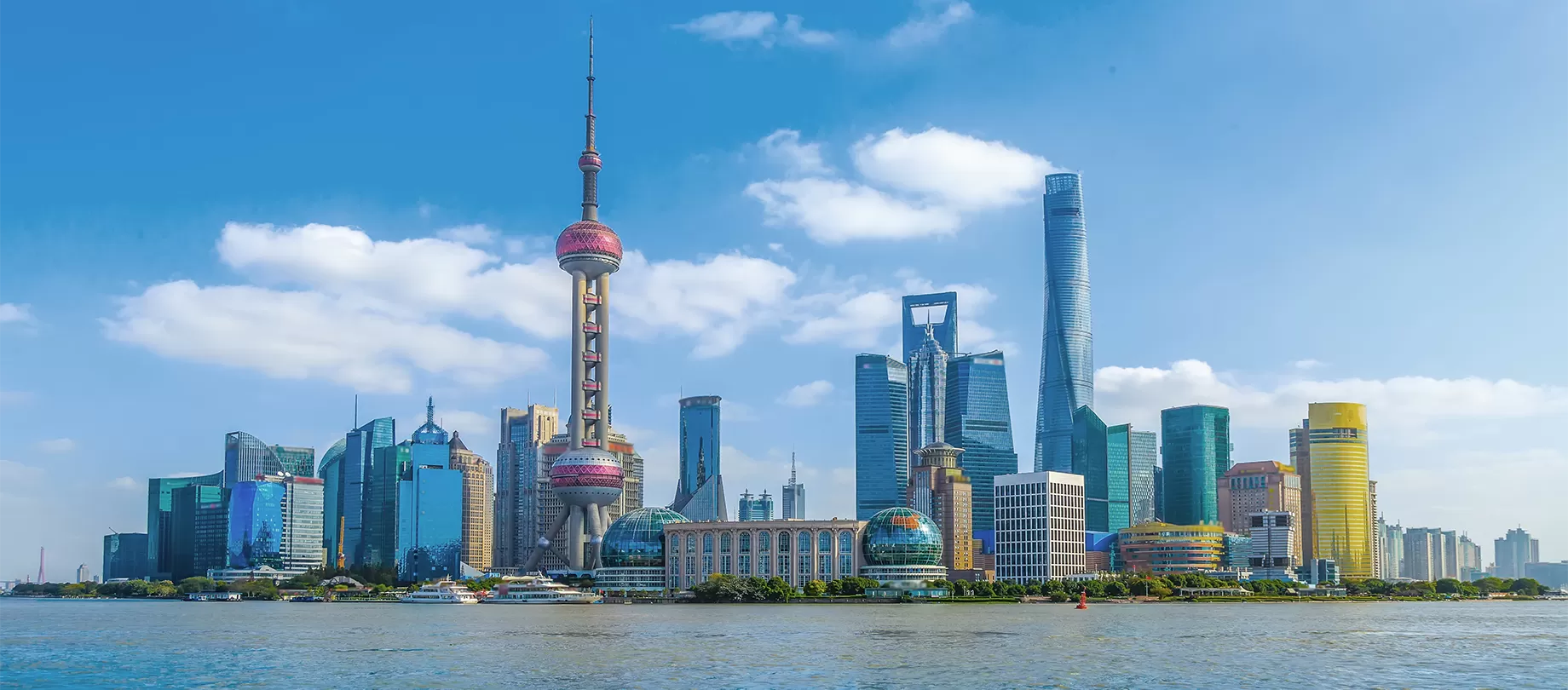
For international visitors, what makes the Bund unique is this: the skyscraper skyline of Lujiazui in Pudong faces the century-old historical buildings of Puxi across the river – standing on the Bund, you can see two eras of Shanghai at the same time. At the northern end stands the Waibaidu Bridge, Shanghai's first steel bridge; at the southern end lies a modern financial district of towering high-rises. The entire Bund is a chapter of Shanghai's modern history that can be read without purchasing a ticket.
II. Core Attraction – The "Exhibition of International Architecture" Unfolding Along the River
The Bund's architectural complex was built primarily during the early to mid-20th century, representing the world-class architectural design and construction technology of its time. In 1996, it was designated as a National Key Cultural Relic Protection Unit. The 52 buildings were not designed by the same architect or built in the same period, yet they form a remarkably harmonious skyline along the river.
The First Façade – Premier Architectural Complex (Along Zhongshan Dong Yi Road)
The following buildings are arranged from south to north along the river, representing the Bund's most iconic architectural ensemble:
No. 1 The Bund · Asia Building – The Bund's "#1 address," an eight-story reinforced concrete frame structure in Neoclassical style with Baroque elements, once hailed as the "First Building of the Bund."
No. 2 The Bund · Shanghai Club Building (former British Club) – Completed in 1911, one of Shanghai's earliest reinforced concrete structures, in British Neoclassical style with Baroque-style towers at both ends of the roof. Once known as the "Eastern London," it was considered the Bund's most exquisite building at the time.
Nos. 10–12 The Bund · HSBC Building – Now the Pudong Development Bank Building, designed with rigorous Neoclassical proportions, harmoniously divided both horizontally and vertically. Below the central dome sits a triangular pediment in the style of a Greek temple – the most classically proportioned building on the Bund.
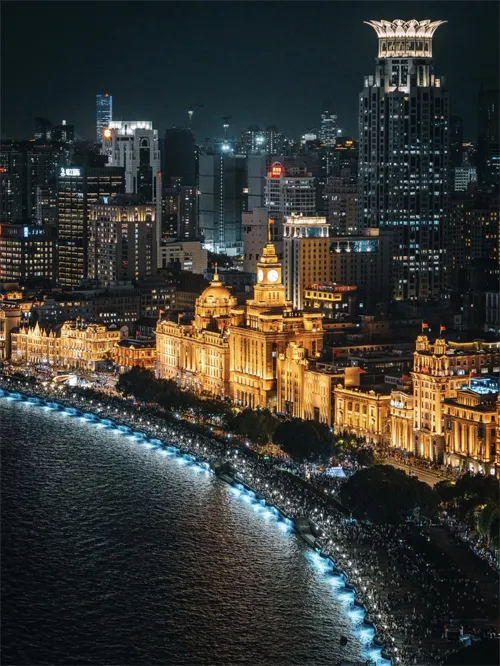
No. 13 The Bund · Custom House – Completed in 1927, its clock tower is the defining feature. Its four clock faces share the same origin as London's Big Ben, and its chimes have rung on the hour for over a century without pause. In 2025, for the first time, it opened its interior to the public, allowing visitors to learn about the building's transformations through exhibitions.
No. 19 The Bund · Palace Hotel (today's Peace Hotel South Building) – Built in 1906 in Renaissance style, with a brick-and-stone mixed structure. It housed Shanghai's first passenger elevator and once featured a Baroque-style pavilion on its rooftop. The International Opium Conference was held here in 1909.
No. 20 The Bund · Sassoon House (today's Peace Hotel North Building) – A masterpiece of Art Deco style, its iconic green pyramid roof gleams in the sunlight. It has been a Bund landmark since its completion, and its interior lobby is steeped in the jazz-age atmosphere of the 1930s.
No. 27 The Bund · Jardine Matheson Building – Completed in 1922, a five-story reinforced concrete structure in a classic Neoclassical style, with its entire exterior clad in granite – one of the earliest examples in Shanghai of stone-clad construction.
No. 29 The Bund · Banque de l'Indochine Building – Completed in 1911, a three-story reinforced concrete structure in Classical style with a clear three-part vertical composition, featuring Ionic columns in its central section.
Waibaidu Bridge and the Suzhou Creek Estuary
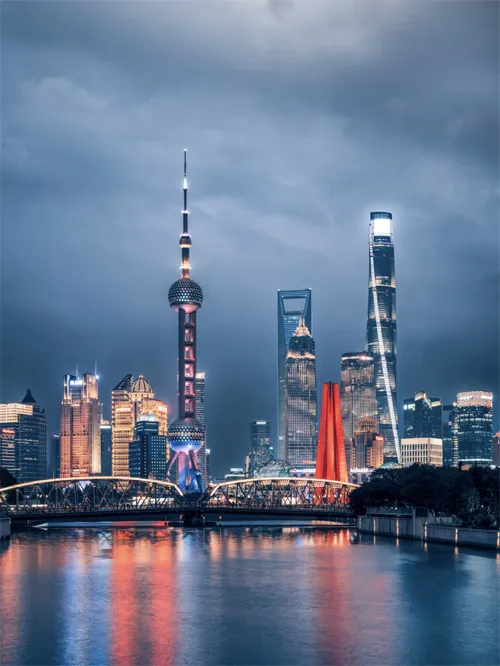
At the Bund's northern end stands the Waibaidu Bridge, Shanghai's first large-scale steel bridge. Its steel truss structure was completed in 1907 and remains an important visual landmark of the Bund. Standing on Zhapu Road Bridge, visitors can capture the classic "old and new skyline in one frame" – the century-old steel bridge and the modern Lujiazui skyline appear together in a single view.
The Bund's Second Façade – The Overlooked Architectural Cluster
On the inland side of the Bund (bounded by Yuanmingyuan Road to the east, Henan Middle Road to the west, Yan'an East Road to the south, and South Suzhou Road to the north), a collection of 141 historical buildings is known as the "Bund's Second Façade." These buildings have been revitalized through "restoration-as-original" renovations and are far less crowded than the riverside promenade, making them ideal for quiet exploration.
Notable Second-Façade buildings to visit:
Holy Trinity Church (201 Jiujiang Road) – One of Shanghai's oldest surviving Christian churches
Former Shun Pao Office (309 Hankou Road) – A landmark in modern Chinese journalism history
Shanghai Postal Museum (276 North Suzhou Road) – An Eclectic-style building with 19 Roman Corinthian columns on its main façade; its inner "Gate of Shanghai" courtyard is a classic photo spot
Rockbund Art Museum (20 Huqiu Road) – Housed in the former Royal Asiatic Society building, blending contemporary art with historical industrial design
III. Two Experiences of the Bund – Day and Night
Day · Architecture in Light and Detail
Daytime is the best time to appreciate architectural details. The slanting sunlight illuminates the clock tower of the Custom House, the green pyramid top of the Peace Hotel, and the dome of the HSBC Building, making every stone carving and Corinthian column clearly visible. This is also the best time to enter the buildings – the lobby of the Peace Hotel, the exhibitions in the Custom House, and the mosaic dome murals inside the Pudong Development Bank are all open to the public during the day.
Night · A River of Lights Between Two Shores
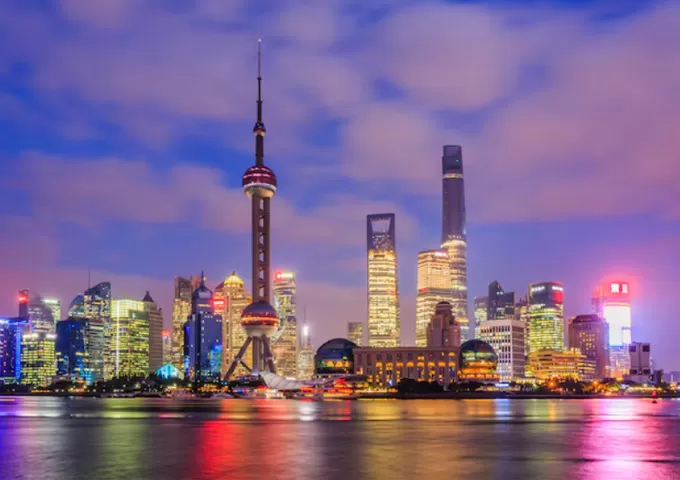
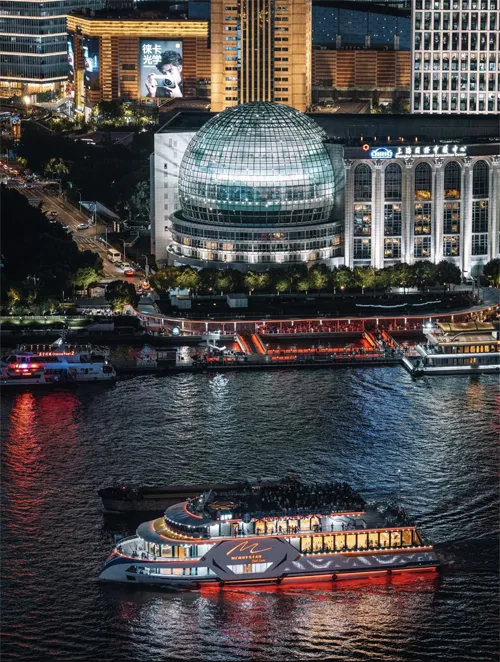
Around 6:00 PM, the warm golden light strips along the Bund's buildings illuminate, outlining the century-old architectural silhouettes. Across the river, Lujiazui's skyscrapers light up simultaneously – modern and classical in dialogue across the water. Standing in the middle section of the Bund's viewing platform, the "old and new" buildings frame both sides of the view, making this the prime spot for capturing Shanghai's signature nightscape.
IV. Extended Experiences – Beyond the Promenade
Huangpu River Ferry
The Bund is not only a viewing promenade but also a crossing point. Taking the local commuter ferry across the Huangpu River offers a breathtaking perspective on the skylines of both shores from mid-river – a more "local" experience than tourist sightseeing boats.
Lujiazui's "Three Towers" (Viewed from Across the River)
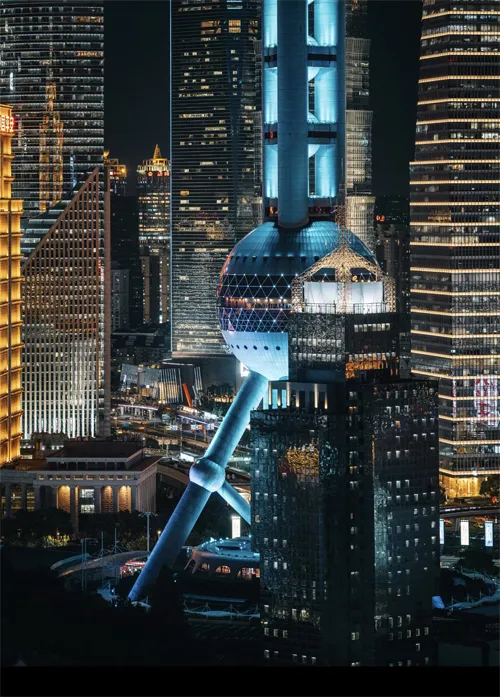
Directly opposite the Bund's viewing platform stand the three iconic skyscrapers of Pudong Lujiazui – the Shanghai Tower, the Shanghai World Financial Center, and the Jin Mao Tower. This "Three Towers" skyline is an essential element of the Bund's visual experience and the ultimate frame for capturing the "old versus new" contrast.
We use cookies to offer you a better browsing experience, analyze site traffic and personalize content. Part of the tracking is necessary to ensure SEO effectiveness, By using this site, you agree to our use of cookies. Visit our cookie policy to learn more.
 English
![[Kangyi Documentary] Summer Coolness Delivery, Warming Hearts on the Journey | Hangzhou Kangyi International Travel Service Pays Tribute to Every Guide Holding the Front Line](/uploads/images/we-are-committed-to-pursuing-excellence-and-striving_1772702268.webp "[Kangyi Documentary] Summer Coolness Delivery, Warming Hearts on the Journey | Hangzhou Kangyi International Travel Service Pays Tribute to Every Guide Holding the Front Line")
![[Kangyi Documentary] Under the Scorching Sun, True to Our Original Aspiration! Tribute to the Most Beautiful Tour Guides Holding Their Posts in the High Heat](/uploads/images/1_1772702274.webp "[Kangyi Documentary] Under the Scorching Sun, True to Our Original Aspiration! Tribute to the Most Beautiful Tour Guides Holding Their Posts in the High Heat")
![[Kangyi Documentary] Spectacular Scene! A 1,400-Person Group Tour of Jiangnan, Successfully Hosted by Kangyi International Travel Service!](/uploads/images/2_1772702280.webp "[Kangyi Documentary] Spectacular Scene! A 1,400-Person Group Tour of Jiangnan, Successfully Hosted by Kangyi International Travel Service!")