"An Oriental fairyland inscribed as a World Cultural Heritage Site — A living poetic lake landscape."
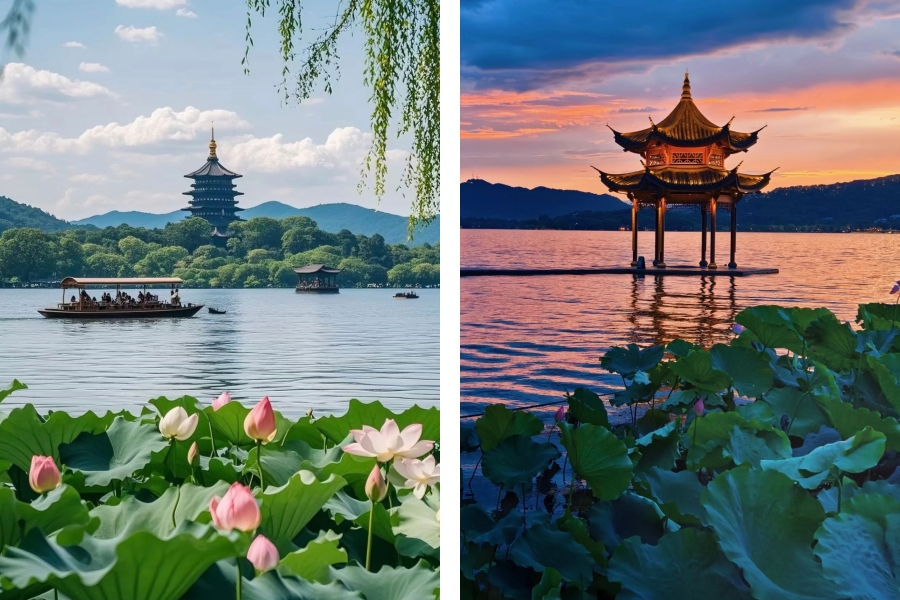
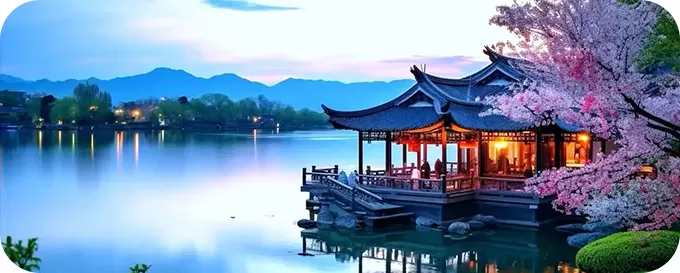
Located west of downtown Hangzhou, West Lake is China’s sole lake classified as a World Cultural Landscape Heritage Site. Its core selling point: far more than a scenic body of water, it integrates natural mountains, garden aesthetics, thousand-year poetry and folk legends into a complete cultural landscape. Since Marco Polo described Hangzhou as "the most beautiful and noble city under heaven" in his travel journals, West Lake has embodied the Western world’s ultimate vision of an Eastern paradise.
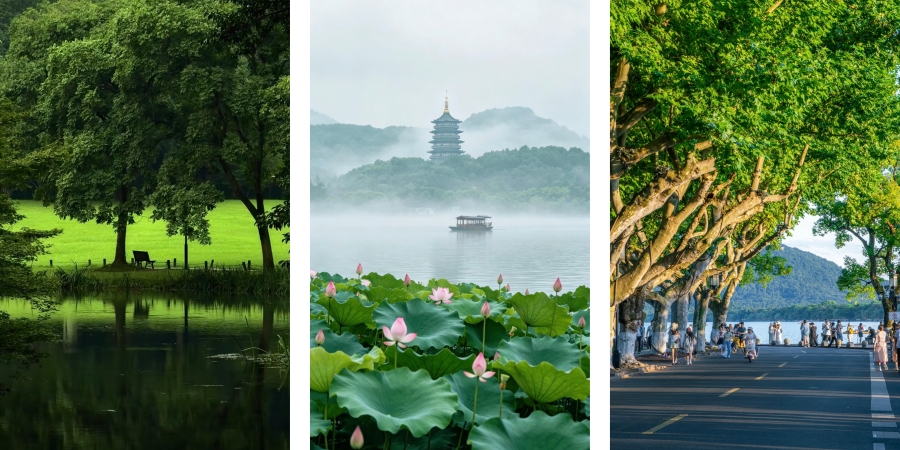
For overseas visitors, its charm lies in subtle contrast: nestled within a bustling city yet feeling secluded, its beauty derived not from grand dramatic spectacles but delicate shifts across seasons, dawn, dusk and weather — the ancient saying "Sunny lake pales beside rainy lake; rainy lake beside moonlit lake; moonlit lake beside snow lake" perfectly captures its charm, a walkable Song-dynasty landscape scroll.
2. Core Attraction — "One Hill, Two Pagodas, Three Islands, Three Causeways, Ten Views"
Landscape Pattern: The Ultimate Model of Chinese Landscape Aesthetics
Its layout can be summed up as: "Three sides ringed by green mountains, one side facing the city." The lake is divided by three long causeways — Su Causeway, Bai Causeway and Yanggong Causeway, with Gushan, Xiaoyingzhou, Huxinting and Ruangongdun dotted as islands on the water. This "one lake, three causeways, three islands" layout originates from the ancient Chinese gardening ideal of "one pond holding three immortal mountains", a classic model of Chinese landscape design aesthetics.
Ten Views of West Lake: Poetic Fragments of Time and Scenery
The Ten Views of West Lake are not merely a list of scenic spots. They solidify specific locations, seasons, hours and weather into unique landscape units, representing the highest realm of Chinese landscape aesthetics that blends poetry and painting. The remaining five views include Willows Dancing by the Oriole Singing Brook, Fish Viewing at Flower Pond, Leifeng Pagoda Bathed in Sunset Glow, Twin Peaks Piercing Clouds, and Evening Bell Ringing at Nanping Hill, which together form the complete aesthetic landscape of West Lake.
3. Differentiated Selling Points — In-Depth Cultural Experiences
1. Oriental Philosophy Embodied in World Cultural Heritage
The West Lake Cultural Landscape interprets the philosophy of "harmony between humanity and nature", carrying the essence and spirit of traditional Chinese culture. Unlike European geometric and orderly gardens, West Lake pursues the aesthetic standard of "crafted by human hands, yet seemingly formed by nature". The West Lake Museum preserves over ten thousand cultural relics, including the only surviving Qianlong’s West Lake Palace Map from the Qing Dynasty, proving that West Lake has maintained its heritage value for at least 200 years.
2. Landmarks of Romantic Chinese Love Legends: Legend of the White Snake & Butterfly Lovers
· Broken Bridge: The meeting place of Xu Xian and Bai Suzhen in the Legend of the White Snake, West Lake’s most story-rich landmark.
· Wansong Academy: The campus where Liang Shanbo and Zhu Yingtai studied together, known as the "Butterfly Lovers Academy", also a sacred place for seeking happy marriages.
For overseas visitors, these thousand-year-old romantic legends endow West Lake’s scenery with soul.
3. Immersive Tea Culture Experience — From Taste to Cultural Symbol
A growing number of overseas tourists crave immersive traditional Chinese culture. The West Lake Longjing tea plantations in Longjing Village and Meijiawu offer hands-on tea picking, stir-frying demonstrations and premium pre-Grain Rain Longjing tastings. The International Cultural Exchange Center at the China National Tea Museum hosts Song-style tea whipping workshops, where foreign visitors can paint patterns on tea foam, learning that tea is far more than a drink — it is history and culture.
4. Cross-Temporal Western Perspectives — From Marco Polo to Modern Vloggers
West Lake has long served as a stage for Sino-Western cultural exchange. In the Yuan Dynasty, Marco Polo praised Hangzhou as an incredibly luxurious city; today, travel vlogs shot by British creators the Hutchinson family have attracted nearly one hundred thousand views on overseas social platforms. In 2025, the photography exhibition Hangzhou in Foreigners’ Eyes for a Hundred Years opened beside West Lake, displaying more than 80 precious images spanning a century that record the unchanged charm of West Lake. This narrative of "Westerners gazing at West Lake" is itself a highly appealing promotional selling point.
Brief summary: West Lake is no ordinary lake — it is a living textbook of Chinese landscape aesthetics, a stage for thousand-year love legends, and the first window through which the Western world imagines the Orient. For overseas visitors, what they witness here is not just scenery, but the Chinese worldview of "harmony between humanity and nature": poetry hides in the landscape, stories hide in the poetry, and civilization hides in the stories.
We use cookies to offer you a better browsing experience, analyze site traffic and personalize content. Part of the tracking is necessary to ensure SEO effectiveness, By using this site, you agree to our use of cookies. Visit our cookie policy to learn more.
 English
![[Kangyi Documentary] Summer Coolness Delivery, Warming Hearts on the Journey | Hangzhou Kangyi International Travel Service Pays Tribute to Every Guide Holding the Front Line](/uploads/images/1_1772702274.webp "[Kangyi Documentary] Summer Coolness Delivery, Warming Hearts on the Journey | Hangzhou Kangyi International Travel Service Pays Tribute to Every Guide Holding the Front Line")
![[Kangyi Documentary] Under the Scorching Sun, True to Our Original Aspiration! Tribute to the Most Beautiful Tour Guides Holding Their Posts in the High Heat](/uploads/images/2_1772702280.webp "[Kangyi Documentary] Under the Scorching Sun, True to Our Original Aspiration! Tribute to the Most Beautiful Tour Guides Holding Their Posts in the High Heat")