"A walkable real-life version of Dwelling in the Fuchun Mountains — Hangzhou’s poetic landscape city."
Formerly named Fuchun, Fuyang lies roughly 40 kilometers southwest of downtown Hangzhou. Its core selling point: the real-life creation site of Huang Gongwang’s monumental landscape painting Dwelling in the Fuchun Mountains, a six-thousand-year-old city nourished by a river flanked by layered green mountains. The Fuchun River winds 52 kilometers through Fuyang, framed by towering peaks, embodying the ancient praise "Marvelous mountains and unique waters, unmatched under heaven".
For overseas visitors, Fuyang’s charm contrasts sharply with West Lake: rather than an intricate compact garden, it unfolds as a vast, unbroken landscape scroll, the perfect physical embodiment of China’s philosophy of harmony between humanity and nature, echoing Huang Gongwang’s words: "This hidden path among Fuchun mountains makes one forget the mortal world entirely."
2. Core Attraction — The Unmatched Beauty of Fuchun Landscape
One River: Fuchun River
Hailed as "unmatched marvelous waters", the Fuchun River boasts crystal-clear blue-green water transparent down to a thousand feet. Ji Xianlin described it as "a divine river descending from heaven". Winding 52 kilometers through Fuyang, flanked by twin green mountains, it delivers the iconic experience of "boat gliding across blue waves, travelers wandering within a painting". Visitors can cruise the river to soak in poetic riverside scenery. Natural sandbars scatter along the waterway:
1. Xinsha Island: A river-centered islet surrounded by water, dense mulberry and forest groves, nicknamed "Hangzhou’s Gulangyu Island".
2. Tongzhou Island: Fuchun River’s second-largest natural island retaining pristine rural scenery, shrouded in mist after rain, ideal for exploring misty Jiangnan and lush green fairy-tale landscapes.
One Painting: Real-life scenery of Dwelling in the Fuchun Mountains
Over 600 years ago, Yuan-dynasty master Huang Gongwang lived in seclusion along the Fuchun River, drawing inspiration from local scenery to complete China’s peak landscape painting masterpiece Dwelling in the Fuchun Mountains. This national treasure forms the core cultural symbol of Fuyang city.
Huang Gongwang’s Seclusion Ground nestles in a quiet mountain valley lined with dense trees and bamboo. Visitors wander winding bamboo paths to explore small grottoes and South Tower, the sites where Huang Gongwang lived and painted, and tour the Huang Gongwang Memorial Hall to appreciate how the nearly eighty-year-old artist created his immortal work amid Fuyang’s serene landscapes.
3. Cultural & Historical Landmarks — From Sun Quan’s Hometown to Yu Dafu’s Former Residence
Distinguished Historical Figures
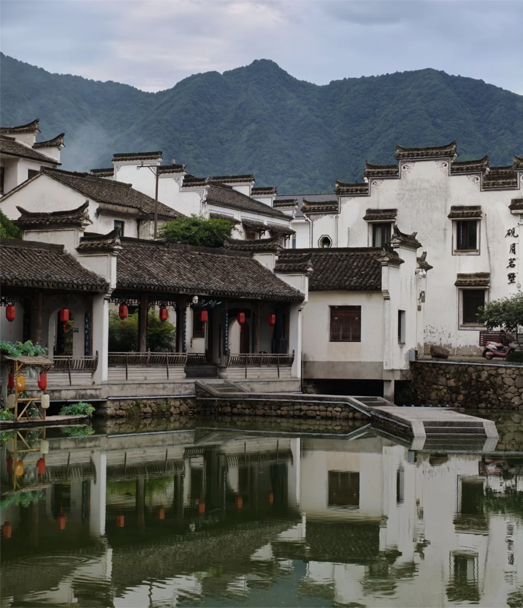
Fuyang’s cultural legacy is defined by its iconic residents: Huang Gongwang, Eastern Wu Emperor Sun Quan, modern writer Yu Dafu and novelist Mai Jia all hold deep ties to the land. Longmen Ancient Town: The largest surviving settlement of Sun Quan’s descendants, one of Jiangnan’s best-preserved clusters of Ming and Qing ancient architecture. Nestled against mountains beside rivers, its cobblestone alleys, horse-head walls and carved ancestral hall plaques carry centuries of clan heritage. The ingenious T-shaped living water system diverts Xixi and Longmen streams through the town, creating the unique scene of "clear flowing water outside every household".
Yu Dafu Former Residence sits at the foot of Guan Mountain, birthplace and childhood home of the great modern literary master. The residence displays vintage writing desks and yellowed manuscripts, recreating Yu Dafu’s ordinary yet profound life, echoing his poetic description of Fuyang: "Peach blossoms bloom brocade in March, fishing boats drift back and forth along the Spring River."
One Mountain: Guan Mountain, Fuyang’s Cultural Icon
Fuyang’s symbolic landmark, hailed as an Eastern China cultural mountain. Though only 42.9 meters tall, it stands prominently beside the Fuchun River where the water bends. Li Bai, Bai Juyi, Su Dongpo and other literati climbed its slopes to compose poetry. Attractions include Qing-dynasty Spring River First Tower, Yan Ziling Fishing Platform (Fuyang’s sole authentic ancient relic), and Pine & Bamboo Villa, the childhood residence of Yu Dafu and his brothers.
Fuchun Taoyuan Scenic Area, home to Asia’s largest cave hall
Fuchun Taoyuan unites Fuyang’s finest natural landscapes, featuring Jiuxiao Blue Cloud Cave, East China’s largest karst cavern hall with diverse stalactite formations. Additional highlights include a hundred-acre wild Chinese hackberry forest serving as a natural oxygen bar and Xiaoyanling Lake for bamboo raft rides. Visitors ride magic carpet escalators to the mountain summit, then descend via glass slides after cave exploration, blending natural adventure and leisure travel.
Tongtian Waterfall, East China’s unique multi-tiered cave waterfall
Formerly named Ge Xian Cave, the site traces its origin to Eastern Jin alchemist Ge Hong who practiced alchemy here. Layered waterfalls cascade tier upon tier inside the cave, East China’s only multi-level underground waterfall cluster delivering powerful visual impact.
Dragon Scale Dam, popular summer water playground
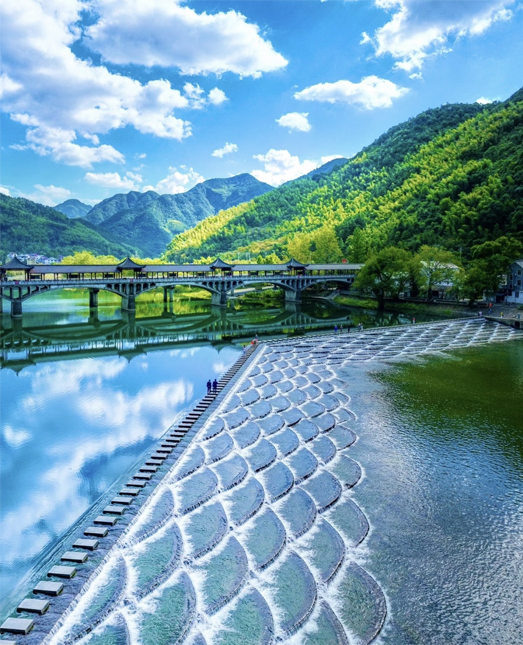
A viral summer destination for water activities. Weirs divide the river into stepped terraces shaped like fish scales shimmering in sunlight; visitors wade barefoot through shallow water, perfect for summer cooling.
Thousand-Year Papermaking Heritage: Fuyang Bamboo Paper & Sizhou Papermaking Ruins
Fuyang’s reputation as a historic papermaking hub is summed up by the phrase "When discussing paper, one must mention Fuyang paper". Its bamboo papermaking craft was inscribed on China’s first batch of National Intangible Cultural Heritage Lists in 2006. The Sizhou Papermaking Ruins, the oldest, largest and most complete papermaking archaeological site discovered to date, is designated a Major Historical and Cultural Site Protected at the National Level.
5. Modern Cultural Landmark — Architectural Version of Dwelling in the Fuchun Mountains
Completed in 2016, Fuchun Mountain Pavilion was designed by Pritzker Prize-winning architect Wang Shu, hailed as the architectural embodiment of Dwelling in the Fuchun Mountains. Perched beside the Fuchun River, its rolling mountain-shaped structures blend seamlessly with distant peaks and the river before it, serving as the optimal starting point for visitors to experience the modern iteration of the Fuchun landscape scroll.
Additionally, Dongxiguan Village rose to fame for its innovative Hangzhou-style rural housing, with continuous rows of white walls and black tile roofs dubbed "painterly Jiangnan", selected as one of Hangzhou’s Top Ten New Cultural Landmarks embodying authentic Jiangnan charm and Hangzhou regional character.
We use cookies to offer you a better browsing experience, analyze site traffic and personalize content. Part of the tracking is necessary to ensure SEO effectiveness, By using this site, you agree to our use of cookies. Visit our cookie policy to learn more.
 English



![[Kangyi Documentary] Summer Coolness Delivery, Warming Hearts on the Journey | Hangzhou Kangyi International Travel Service Pays Tribute to Every Guide Holding the Front Line](/uploads/images/1_1772702274.webp "[Kangyi Documentary] Summer Coolness Delivery, Warming Hearts on the Journey | Hangzhou Kangyi International Travel Service Pays Tribute to Every Guide Holding the Front Line")
![[Kangyi Documentary] Under the Scorching Sun, True to Our Original Aspiration! Tribute to the Most Beautiful Tour Guides Holding Their Posts in the High Heat](/uploads/images/2_1772702280.webp "[Kangyi Documentary] Under the Scorching Sun, True to Our Original Aspiration! Tribute to the Most Beautiful Tour Guides Holding Their Posts in the High Heat")